Scientists at the University of Leeds (in collaboration with researchers in York, Cardiff, the USA and China) have shown how the immune system's defenses could slow down or stop tumour growth.
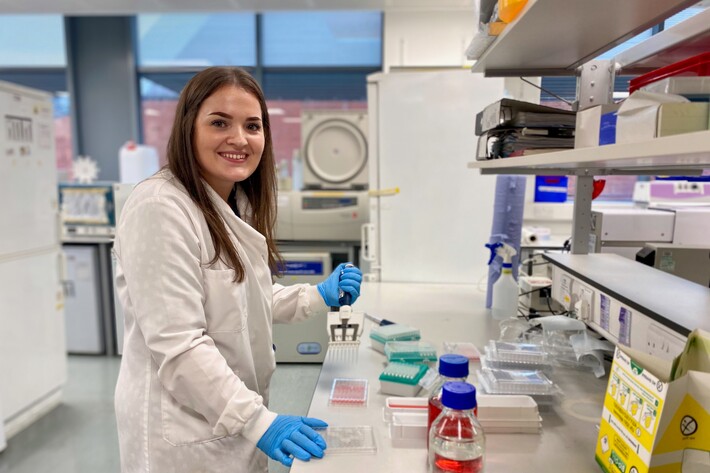
The study tested whether a modified virus, called Maraba virus MG1, could be used as treatment for Ewing sarcoma patients. This virus is designed to attack cancer cells while also encouraging the body’s immune system to fight the disease.
Using Ewing sarcoma cells grown in the laboratory from patient samples, researchers found that MG1 was able to directly attack cancer cells, including some that were resistant to chemotherapy. Importantly, healthy cells were largely unaffected, demonstrating a promising move towards kinder and more targeted treatment.
Additionally, MG1 was shown to boost the activity of natural killer (NK) cells - important immune cells that hunt down and kill cancer cells. Once activated by the MG1 virus, NK cells were better at destroying tumour cells in laboratory models of the disease.
The research found that some healthy (non-tumour) cells, are naturally resistant to MG1. This means that MG1 virus specifically attacks cancer cells, as healthy cells have natural defences to MG1 virus attack. In addition, Ewing sarcoma cells more recently derived from patient tumours (when compared with Ewing sarcoma cells grown in the lab for several decades) also have some level of resistance to MG1 virus. However, these virus defence mechanisms, which ‘interfere’ with virus therapy, also help to switch on immune cells.
This combination of killing tumour cells directly and activating the immune system against tumours is a new way of tackling Ewing sarcoma, which has seen little improvements in treatment over the past forty years.
Dr Tyler Barr, Research Fellow at the University of Leeds, said:
I am very grateful to the Bone Cancer Research Trust and their supporters for funding this research. Understanding how we can switch on the immune system to recognise and attack cancer cells is a very powerful approach to cancer treatment, which has seen great success in other types of cancer. I hope that we can bring this success to Ewing sarcoma patients in the future.
Dr Zoe Davison, Director of Research and Information at the Bone Cancer Research Trust, added:
We are incredibly proud to have contributed towards the funding of this pivotal study, which provides an important first step towards developing new treatments for Ewing sarcoma patients that are so desperately needed. Research like this offers hope for the future and helps move promising ideas closer towards new treatments.
To find out more, visit the Cancers journal