Researchers at the University of Birmingham will explore potential weak spots in Ewing sarcoma cells to help develop kinder, more effective treatments.
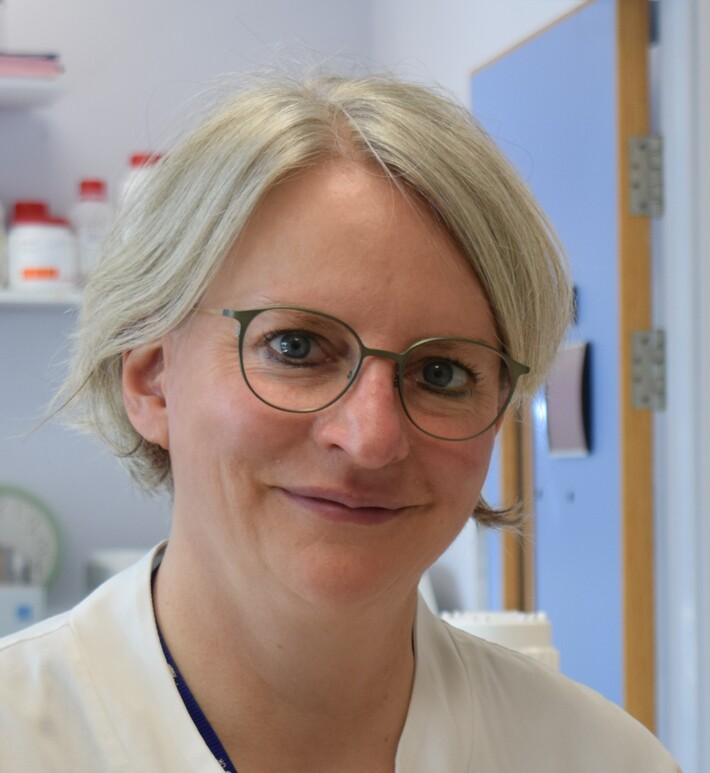
The team, led by Professor Clare Davies and Dr Suzanne Gantz (pictured above), are exploring the protein PRMT5 which may help cells survive the stress caused when they multiply rapidly.
This protein is being studied as a target in more common cancers including breast and brain tumours, meaning there are drugs in development that block its activity.
While it is widely known recognised by the scientific community that Ewing sarcoma is driven by a specific gene mutation (EWSR1-FLI1), this mutation is incredibly difficult to target. EWSR1-FLI1 can cause cells to multiply rapidly, putting them under huge pressure and causing damage to their DNA — a process known as replication stress.
To survive, Ewing sarcoma cells rely on coping mechanisms to repair the damage. It is believed that PRMT5 may help Ewing sarcoma cells manage this stress.
By understanding how PRMT5 and EWSR1-FLI1 work together, the researchers hope to determine whether blocking PRMT5 could cause Ewing sarcoma cells to die without harming healthy cells.
The study will focus on:
- Discovering how PRMT5 helps Ewing sarcoma cells control replication stress
- Testing whether drugs that block PRMT5 (inhibitors) could be effective treatments
- Identifying markers that could determine which patients are most likely to respond
- Exploring combinations of PRMT5 inhibitors with other drugs to increase effectiveness

Professor Clare Davies, Reader of Cell Biology, said:
As PRMT5 inhibitors are already being tested in clinical trials for other cancers, our project could facilitate their use for Ewing sarcoma and move us closer to life-changing treatments with fewer toxic side effects. We are incredibly grateful to the charities supporting the work and hope that, by establishing a link to the more easily targeted PRMT5, we can offer a new treatment approach that could benefit patients.
Dr Viqui Vinader, Head of Research at the Bone Cancer Research Trust, added:
We are proud to be funding this exciting project, which is only made possible thanks to the supporters of our charities. Together, we are driving forward research that offers new hope for Ewing sarcoma patients. We look forward to the results of this promising study, which we hope will bring us one step closer towards much-needed change.
This project is funded as part of an £800,000 investment in Ewing sarcoma research by the Bone Cancer Research Trust, CCLG: The Children & Young People's Cancer Association, the Ewing Sarcoma Research Trust and Great Ormond Street Hospital Charity.
Visit the link below to find out more: