Meet Dr Meena Rafiq, who is looking for patterns in GP data to uncover trends in sarcoma diagnosis. As a practicing GP, Dr Rafiq’s blend of research expertise and hands-on experience puts her in a unique position to improve outcomes.
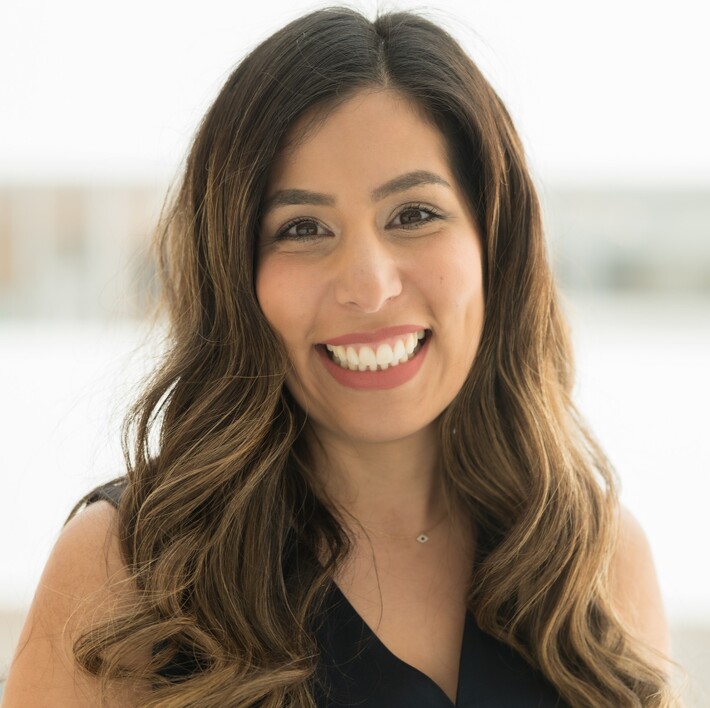
In our interview, Dr Rafiq explains what she wishes every GP knew about bone cancer and shares the famous scientist she would invite to dinner.
Please can you give us an overview of your research project?
We know that a real priority for sarcoma patients is improving early diagnosis.
Most patients with sarcoma will first see their GP with possible symptoms, so we want to conduct research in primary care to understand the different ways patients are presenting, what pathways they have to diagnosis, and where there may be opportunities to diagnose them earlier. We are using nationwide, linked primary care data to do this for different types of sarcoma so we can really understand it properly.
We're incredibly excited to get started with the study as it's a neglected area. It's great that there's interest and excitement in improving early diagnosis — it is a huge area that could really benefit patients.
What drew you to study this issue, and why primary bone cancer specifically?
I think it was my role as a GP. As well as being a researcher, I've worked clinically both here and in Australia. It is so difficult to diagnose sarcoma in the early stages, and often tumours are large at presentation or patients present as asymptomatic (without symptoms). The impact this has on their treatment and outcomes can be huge.
Both seeing this from a GP perspective and understanding it from a patient's perspective made me really appreciate that more needs to be done in this area. There's so much research carried out in colon cancer, lung cancer... but with sarcoma you don't see that much primary care research being undertaken. I believe that patients would really benefit from increased funding in this area.
We're not saying that doctors are intentionally missing things out or aren't acting in the correct way, the issue is the huge evidence gap and there are lots of unknowns with sarcoma. We want to bridge those gaps to help GPs and healthcare professionals identify these patients earlier.
What are the biggest diagnostic challenges that GPs face with bone cancer?
One is that there isn't enough evidence in primary care, which means there aren't many guidelines in place for sarcoma patients.
For example, many people don't know that there are only two symptoms that appear for bone sarcoma in the NICE guidelines. They are really limited, whereas we know from speaking to sarcoma patients that they present with other symptoms which are not being picked up.
Because of this, GPs don't know what symptoms to look out for or what blood test results to flag. These are alarm bells that should be ringing when they see patients with possible sarcoma.
How do you see your project changing the way bone cancer is detected in the early stages?
Most GPs will only see one or two cases of sarcoma in their whole career, whereas if we bring together all cases of sarcoma across the UK using a nationwide dataset, we can find those learning points and share them with GPs.
Our aim is to find robust, clinical evidence that can be used to help change national guidelines. For example, this could include symptoms in blood tests that are potential early signals of sarcoma. However, we know that not all sarcoma patients are the same and present in different ways. Because of this, we want to look at different patient groups that may be experiencing delayed diagnosis or complicated routes in order to develop solutions that support early diagnosis for all.
We're also forming collaborations. There's a team in the Netherlands who are doing similar work in sarcoma, and another in Australia. We hope to share our findings with other countries so that we're able to make an international impact, as opposed to just a national one.
What is one thing you wish every GP knew about bone cancer?
I wish that more GPs would do imaging with patients that have signs of possible bone sarcoma. If patients are presenting with bone pain or a lump, we need to have a really low threshold for imaging. This is the key to diagnosing bone sarcoma early.
We need to be much more liberal with the scans we are requesting, especially for conditions like sarcoma which are difficult to diagnose. Ultrasounds and x-rays are easy enough to arrange, and are relatively cheap and cost-effective. We need to ensure GPs have quicker and easier access to scans — making this process more open would be beneficial for all patients.
Ultimately, GPs need to start thinking about sarcoma and be willing to send a patient from imaging to rule it out. Having it in the back of your mind is my take home message.
Does your clinical experience influence your research, and vice versa?
Having experience of patients with sarcoma made me want to do something about it.
I wanted to try and use my skills as a doctor to see if I could contribute to the field, and I think being a GP has definitely influenced my research. I see every day the challenges of both primary care itself and the challenges that patients face, which helps me understand how research can make things better and what parts of primary care we can try to improve that will help us reach early diagnosis.
Our research group is part of Epidemiology and Cancer Healthcare Outcomes (ECHO) here at University College London. This is really important because we can learn what has been done for other diseases and cancers, with the hope of translating some of those methods and findings in sarcoma.
We want to conduct research for patient benefit that can be translated into clinical practice, and we're determined to have meaningful impact that could change national guidelines, improve pathways, and help patients be diagnosed earlier.
What inspired you to become a GP?
My pathway into general practice began because I really like the holistic part. You can see a GP your whole lifetime from when you're born, your teenage years, your adult years... they can look after your whole family.
I had the family GP experience growing up, and I think it's so wonderful to have this care provider who is continuous throughout your lifetime and understands your family, your background, and everything you've gone through. It's a really special role, and that's what led me to it.
What is your favourite way to unwind?
I'm a huge crafter and I really enjoy sewing. It started off as a lockdown hoppy when I was stuck in my flat; my husband bought me a sewing machine and from that I started making my own clothes and little things for family and friends.
I just love to sew. I'm a bit slow, but it's a fun thing to do! Everyone needs a release and something different to do outside of their profession.
If you could have dinner with a famous scientist, past or present, who would it be and why?
My dinner guest would be Rosalind Franklin. She is one of the original people who identified the structure of DNA. People often talk about Watson and Crick, but Rosalind Franklin often isn't mentioned, and she took one of the first photographs of it! I think she would have a really interesting story to tell.
Do you have a message for patients and loved ones?
Patients are at the heart of everything that we do. We use lots of patient data from electronic health records in our research, and we want to thank patients for everything they contribute from sharing data with us.
It's the patient that makes our research and the discoveries possible. We hear you, we listen to you, we stand with you, and hopefully we can make things better together.
Learn more about this pioneering work at the link below: