In our latest interview, meet Dr Sarah Snelling and Dr Mathew Baldwin, who are co-leading an innovative project focused on the early diagnosis of osteosarcoma.
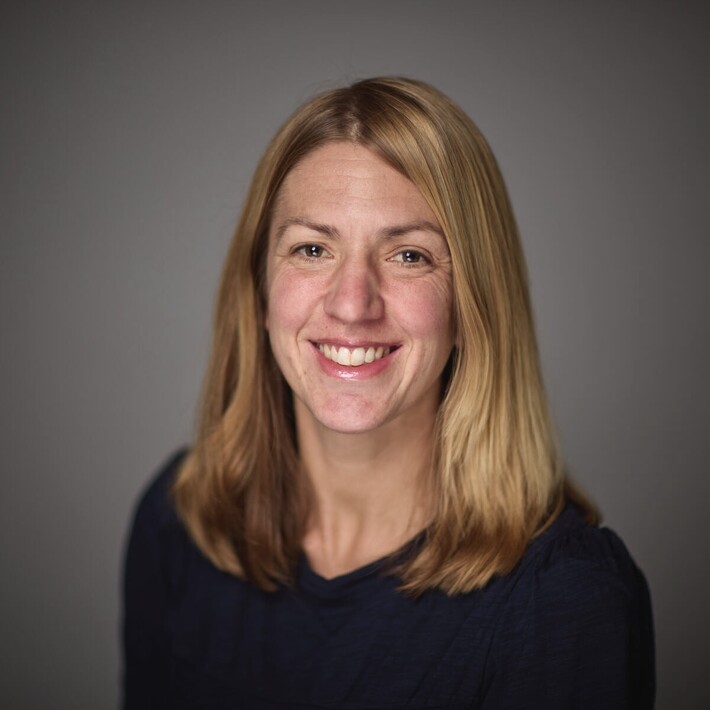
By collaborating with GPs, surgeons and health economists to ensure the test they're setting out to develop is fit for clinic, the work is a crucial step forward in finding new ways to find osteosarcoma in its earliest and most treatable stages.
We caught up with Dr Snelling and Dr Baldwin to learn more about their project and its potential for a future breakthrough.
Please can you give us an overview of your early diagnosis project?
For our study, we are using both archival samples and current tissue samples that we will collect from patients with osteosarcoma. We are also going to collect tissue samples from patients who do not have osteosarcoma. After this, we will compare them to look for biomarkers that can indicate whether someone has osteosarcoma, especially in the early stages.
Then, we are going to look for those biomarkers in blood samples, because it is much quicker and less invasive over tissue samples. We are then going to use machine learning (ML) methods to refine our biomarker list, so that we can come up with the best list possible for identifying whether or not someone has the disease.
Through our work we will collaborate with GPs, sarcoma surgeons, and health economists so while we're doing lab-based work, we are making sure the test can be used in clinic and is cost effective. Ultimately, we hope to devise a test that is actually translatable and can be used in patient care.
What are the main advantages of using blood-based tests for osteosarcoma?
This hasn't been done in sarcomas before, but liquid biopsies (blood-related tests) have been developed for colorectal (bowel) cancers are starting to be rolled out in clinics. The GPs we are working with on this project also worked on the colorectal tests, so they know what they're talking about in terms of creating tests for primary care.
The problem is that, when you speak to people in primary care, they say it is really hard to diagnose bone sarcomas because people present with joint or bone pain that's not necessarily the first indication of disease. This means it's a long, protracted diagnostic pathway that we're dealing with.
A big advantage of blood testing is it's less invasive. Otherwise, you have to do a tissue-based diagnosis through a biopsy, which can often need a general anaesthetic especially in children who are commonly affected by osteosarcoma.
The longer-term advantage is that if you diagnose earlier, you are able to treat the patient earlier, and you can better see the margins of the tumour to increase the effectiveness of surgical removal. We hope our blood test could be used for tracking and follow-up care also.
Are there lessons from other cancer research that has informed your approach?
That liquid biopsies can be used in breast and bowel cancer to aid earlier diagnosis, which is what we're hoping to achieve. We're at a point where osteosarcoma outcomes haven't significantly improved for many years, and that may be because we haven't yet figured out how to diagnose it quickly.
How do you balance lab-based research with clinical impact?
That's down to the team, and is one of the reasons why we've prioritised having a multidisciplinary one. With the involvement of pathologists, sarcoma surgeons and GPs, we hope that we're collecting the correct tissue samples and asking the right questions at the right time.
From the tissue samples, we want to learn as much about the clinical features of osteosarcoma as possible. They hold so much important patient information, which we will go on to analyse in the lab. After that, we will discuss the results with the wider team to ensure we are interpreting the findings correctly.
If you had to describe your project in three words, what would they be?
Collaborative, essential, and rewarding.
What's one scientific instrument that you secretly (or not so secretly) love using?
I think we love and hate all scientific instruments to be honest! The important thing we find within the team is what one scientific tool is really helpful for, and then we work together on the strengths of the tool in order to validate findings.
What's your coffee order for a long day in the lab?
Sarah: An espresso or an americano — it's really boring, but you can't go wrong.
Mat: I'm less fussy than Sarah, and will drink any form of coffee!
When you're not in the lab, what do you get up to?
Sarah: I have two sons who keep me extremely busy! My ten-year-old loves mountain biking and my two-year-old loves his balance bike so we do lots of that, skiing, running, climbing... we're a very outdoorsy family!
Mat: My two kids also keep me busy, and I love being involved with all of their activities and latest interests.
Research focused on early diagnosis is a key priority for our community. Do you have a message for patients and loved ones?
We are incredibly grateful to the patients who take part in research and are prepared to either donate tissue samples or offer feedback.
The one thing we noticed when putting this project together is how helpful and selfless patients and their families are. They really do care about others as well as themselves. Caring about other families in the future and thinking 'I don't want them to go through this' is amazing, because treatment can be incredibly stressful.
Learn more about this pioneering work at the link below: