This Childhood Cancer Awareness Month, we're proud to launch an operation guide in collaboration with the specialist physiotherapy team at the Royal National Orthopaedic Hospital.
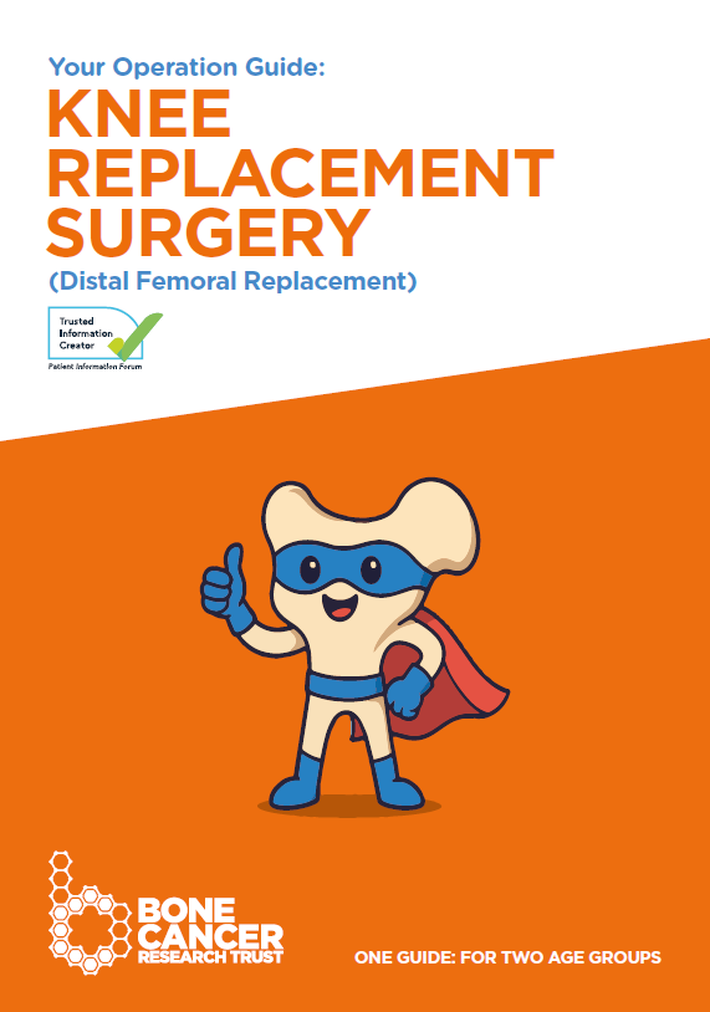
This Childhood Cancer Awareness Month, we're proud to launch an operation guide in collaboration with the specialist physiotherapy team at the Royal National Orthopaedic Hospital. The PIF TICK accredited guide has been created with the highest standards of trusted health information to help younger patients with practical and emotional support around surgery and recovery. To highlight the importance of support for children with sarcoma, we spoke with Specialist Physiotherapist Johnson Gbaykie.
How did the paediatric operation guide project start?
The project grew from a gap we kept seeing in day-to-day clinical practice at the Royal National Orthopaedic Hospital. Children undergoing complex limb-salvage surgery, and their families, were receiving a lot of important information verbally, often during an already overwhelming period. Outside of the established amputation pathway, we did not have paediatric-specific resources for many of our common operations.
This meant that the information families received could vary, and it was difficult for them to remember everything after a consultation or session. We wanted to create something children and families could read before surgery, return to during recovery and use to support the conversations they were having with the clinical team. The idea developed into a wider service-improvement project with our orthopaedic oncology physiotherapy team, master's physiotherapy students on a six-week placement and the Bone Cancer Research Trust.
Why have these operation guides been developed, and how will they help patients?
The guides have been developed to make a complex operation and rehabilitation journey feel clearer and less frightening. They explain, in age-appropriate language, what the operation involves, what a child or young person may experience in hospital, and how physiotherapy will support their recovery, which exercises and precautions are important, and when to ask the team for help. The child-friendly illustrations are especially important because they make information easier to understand without relying on medical language alone. Families can revisit the guide at their own pace, write down questions and feel better prepared for each state of recovery. The guides also help our team provide consistent information while still adapting advice to the needs of each individual child. Ultimately, while making children and families feel more involved in their care.
Could you tell us more about the collaboration with BCRT?
BCRT has been involved as a genuine partner rather than simply receiving a finished clinical document. We met regularly during the development process to discuss the structure, wording, illustrations and overall tone of the resources. Our RNOH team contributed the clinical pathway and rehabilitation expertise, while BCRT helped us think carefully about how to communicate that information clearly, sensitively and in a way that works for children, young people and families. Their support with the artwork, design, and publication has helped turn the clinical content into a resource that is engaging and accessible. Feedback from patients, families and colleagues has also informed the work. That combination of clinical expertise, charity insight and lived-experience feedback has been one of the project's greatest strengths.
What's next for the operation guide?
The distal femoral replacement guide is the first guide to be published, and we are now completing the final artwork and publication process for three further operation guides, with release planned for October. We are also planning to develop supporting animations so that children and families can access the information in different ways. The next phase will include promoting the resources across paediatric sarcoma and specialist orthopaedic centres, inviting clinicians to consider how the guides align with their own practice and helping more eligible families find them. Alongside this, we plan to evaluate how the resources affect patient understanding, confidence and engagement with rehabilitation. The longer-term ambition is to build a trusted collection of paediatric resources that can continue to grow as new needs are identified.
Johnson Gbayike, Specialist Physiotherapist
