Diagnosed with Ewing’s sarcoma at the age of 22, Dr Abdullah Obaid Khan brings a unique perspective to Bone Cancer Research Trust’s Patient and Public Involvement Panel (PPIP), combining his experiences as both a primary bone cancer patient and a researcher
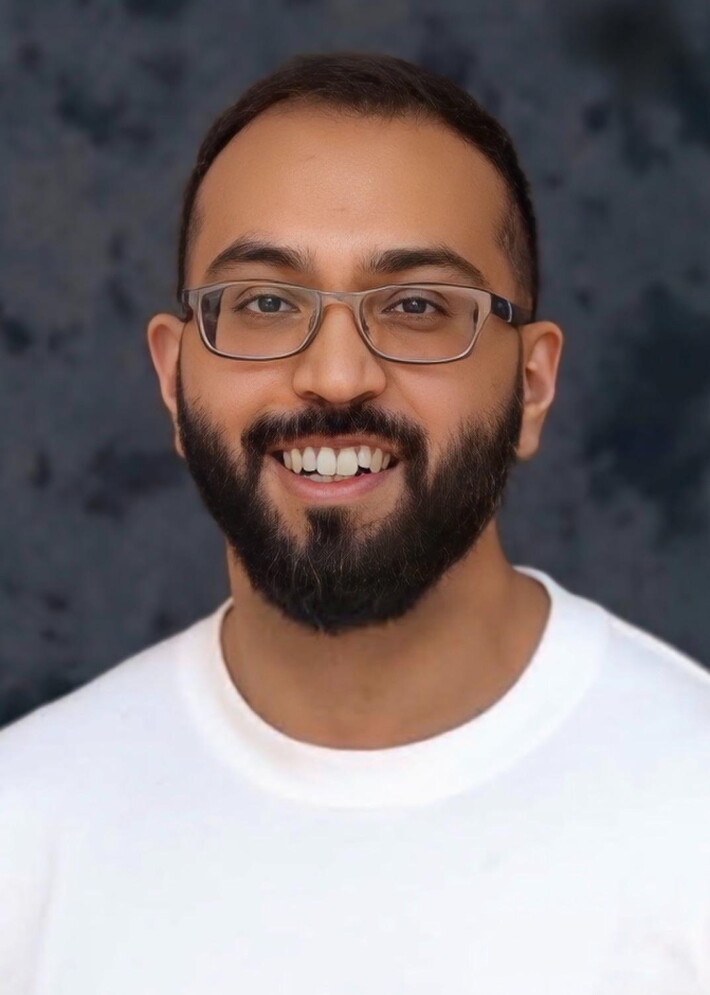
Dr Abdullah Obaid Khan is an Associate Professor of Tissue Engineering, Group Leader and Wellcome Trust Career Development Fellow at the Medical Research Council Molecular Haematology Unit, University of Oxford.
Diagnosed with Ewing’s sarcoma at the age of 22, Dr Abdullah Obaid Khan brings a unique perspective to Bone Cancer Research Trust’s Patient and Public Involvement Panel (PPIP), combining his experiences as both a primary bone cancer patient and a researcher. In this interview, he reflects on his diagnosis and treatment, his journey back to research, and why patient voices are so important in shaping the future of bone cancer research.
Can you tell us a little about your personal experience with primary bone cancer and what led you to get involved in the Patient and Public Involvement Panel (PPIP)?
I was diagnosed with Ewing’s sarcoma shortly after completing my Master’s degree. Like most people, getting diagnosed was a long and difficult process - cancer wasn’t really on the radar. I was 22, very active and healthy, it just started as a bit of numbness in my ankle. Within a few weeks, my leg was permanently bent into an L-shape, and I had a swelling about the size of a grapefruit and I started losing weight frighteningly fast. I couldn’t sleep as the pain was worst at night, and no drugs seem to touch it. Like a lot of patients, I also drove myself crazy wondering if it was all in my head.
It is strange to say this, but after all that the diagnosis was a bit of a relief. At least we knew what was wrong, and the medical team were all fantastic. I went on to high dose chemotherapy, which was a uniquely awful experience, and despite the efficacy of the treatment unfortunately my doctors felt the safest thing would be to amputate halfway up my femur. As the tumour was in my fibula, our hope would be that we could spare the limb, but I had a very frank discussion with my surgeon and medical team who believed that my best chance of survival would be to amputate high.
I had my amputation which, in all honesty felt like a vacation as I had a break from the chemotherapy. They give you really good drugs at that point, and no toast tastes better than hospital white bread slathered in butter with tea. The team at the Royal Orthopaedic were fantastic, and with the help of some reality TV that phase of my treatment was over.
I felt much better after the amputation, but had to go back on to a few more rounds of chemotherapy. The second lot of treatments was pretty brutal, I think my body had been through the wringer so I struggled a lot with the side effects. In the end I had my last dose of chemo on Christmas 2013, and was discharged on Boxing Day.
I went on with my rehab in the months that follows and started getting back into research. My master’s supervisor kindly held out a research assistant position for me, and so I juggled the slow return to normal life while re-learning to walk. In hindsight, I probably shouldn’t have rushed into it as was a good year before my energy levels approached anywhere near normal. I would often nap in the microscope room or other equipment rooms, and ‘chemo-brain’ is a very real, very difficult phenomenon I had not anticipated. In truth, I think I am still a much duller instrument than I was before this all began.
In any case, I went on to start a PhD at the University of Birmingham working on super-resolution microscopy and inherited bleeding. I had an idea in that time about a method of building human tissue platforms to improve cancer treatment and development. I was introduced to my now long-term mentor Prof Beth Psaila, who along with others supported me to get my first lot of independent funding as a Sir Henry Wellcome Fellow. That work evolved into a set of papers and tools that are, we now hope, a new gold standard in how blood cancers are studied. I am now an Associate Professor of Tissue Engineering at the University of Oxford, my group is still Wellcome funded (thank you) and we are focussed on how to build better human model systems to identify and validate new drug targets.
I became involved with the PPIP because in all honesty I was bullied into it. I had avoided a lot of engagement beyond my own fundraising and outreach as a researcher because it doesn’t take me much to take me back to that time in my life. After giving a talk at the Cancer and Bone Society in Sheffield, I had a talk with one of the professors there who was a trustee for the BCRT. She told me, quite firmly, that I had a moral responsibility to advocate for patients which I took very strongly to heart.
BCRT luckily for me are a wonderful charity to work with and I hope I can help them in their efforts by providing a unique point of view as both a scientist and a patient.
Why do you feel it's important for patients and families affected by primary bone cancer to help shape research?
That’s a great question and the answer has many facets.
One is that the business of research can sometimes veer very far away from the patient - ultimately we need to remember that work in that space, especially where funded by charities, is meant to benefit patients and their families. There are many different forces in the research space, capital and pharma often pulling in the direction of revenue and profit, often researchers and universities pressured into publication and grant funding. Having a clear voice to remind everyone that the ultimate goal is to improve outcomes for patients and their families is essential. It serves as a North Star in a difficult sector.
Equally research itself is an incredibly demanding line of work. Biological science is not a discipline for the faint of heart, I speak from experience. It is very common for PhD students and post-docs working on these projects to regularly work 7 day weeks on short term contracts, with steadily narrowing career prospects in a contracting research environment. I think for many of us in that space, it can be hugely inspiring to remember that we are working towards the goal of ultimately helping people.
What difference do you hope your involvement in research will make for future patients and their loved ones?
For my own research? Though I don’t work directly in the bone cancer space, a lot of my work is about building technologies that can, we hope, bridge the huge translational ‘valley of death’ that exists between fundamental research and clinical efficacy. Despite huge leaps in technology we still face an over 90% failure rate in clinical trials, and for many rare diseases like sarcomas, there isn’t enough work in bridging that gap. My hope for my own research is that ultimately we can make the gap between discovery and patient benefit smaller.
With my PPIP hat on I hope that I can help select research that will ultimately make a real difference. It is an incredibly difficult task, which is only getting harder as resources winnow. In the UK at least it is really the charity sector that sustains our output and impact.
How do you think BCRT helps patients and families feel heard, valued and able to influence research in meaningful ways?
I think the story of how BCRT was founded is incredibly meaningful, and I think the efforts the charity puts into putting patients and families front and centre is empowering in a circumstance where one mostly feels helpless.
It is very beautiful to me that people who back BCRT, like so many others who support charity funded research, are people who have often suffered through immense grief and loss and who choose to work towards making a future where no one else has to suffer that experience.
Bone Cancer Research Trust's Patient and Public Involvement Panel (PPIP) helps ensure that the voices of people affected by primary bone cancer are represented in the charity's research activities and funding decisions. By bringing together lived experience and scientific expertise, panel members help keep patients and families at the heart of research.
If you would to get involved in PPIP, please email [email protected]