In our latest research update, we're making exciting progress with adamantinoma - one of the rarest types of primary bone cancer.
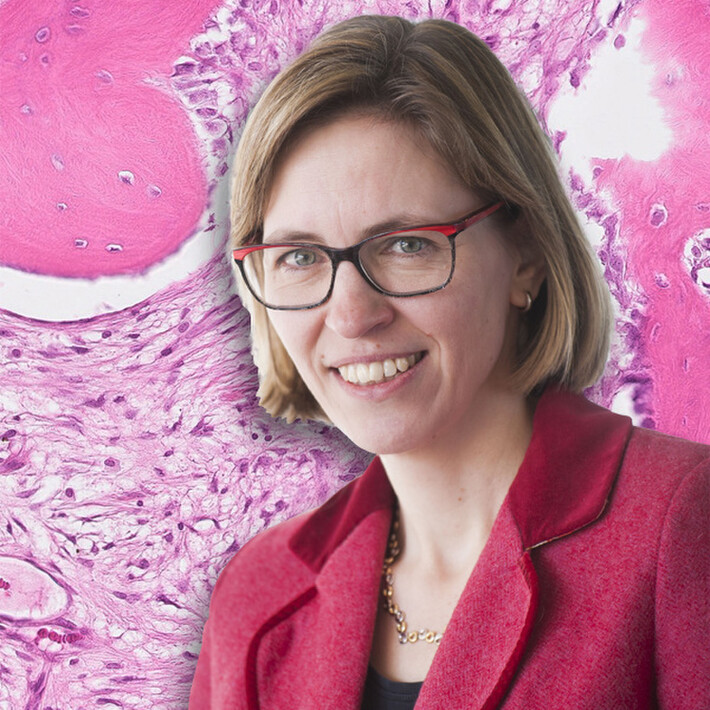
Scientists in the Netherlands have been collecting a huge amount of data from DNA to help understand adamantinoma better.
Back in 2024, we awarded £100,000 to Professor Judith Bovée at Leiden University and her collaborators to develop robust criteria to differentiate between osteofibrous dysplasia (OFD), OFD-like adamantinoma and classic adamantinoma to improve outcome prediction and treatment planning.
One year on, Professor Bovée and her team have studied cancer and other cells in its surroundings (including immune cells) from one of the largest tumour sample collections in Europe.
They studied:
- OFD: a benign (non-cancerous) tumour
- OFD-like adamantinoma: a tumour that grows locally, but unlike cancer, does not spread to other parts of the body
- Classic adamantinoma: a malignant (cancerous) tumour
In doing so, they aim to understand why cells in these closely related tumour show markedly different behaviours.
So far, the research has found that the presence of certain immune cells within tumour environment can play a significant role in the behaviour of these tumours, ultimately influencing patient outcomes.
The team have also discovered a new subtype of classic adamantinoma, which could help doctors understand how it behaves and how best to treat it.
By unlocking the secrets of adamantinoma, we become one step closer to a more accurate diagnosis and more targeted treatments in the future.
As part of our Research Strategy, we're committed to supporting research across all forms of primary bone cancer, no matter how rare. Thanks to your support, this commitment is becoming a reality for patients who need more than just hope by driving forward better diagnosis and treatments, which our community has identified as their top priorities.
Pioneering projects like this have been made possible thanks to the continued support of the Liz Clarke-Saul Fund, with this year marking five years since they launched the UK's first adamantinoma research programme.
Learn more about this study below: