The Bone Cancer Research Trust was proud to participate in and support the 8th EuSARC Annual Symposium, held in Oslo, Norway, from 4–7 June 2026. The symposium brought together researchers, clinicians and patient representatives from across Europe and beyond, united by a shared commitment to improving outcomes for people affected by bone and soft tissue sarcomas.
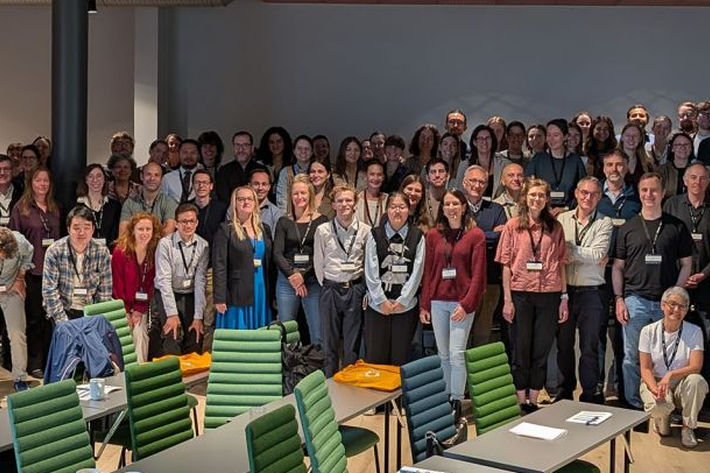
Originally supported by the Bone Cancer Research Trust through funding for the first meeting in Sheffield in 2017, EuSARC has evolved from a single scientific meeting into a thriving European research network. Today, it plays an important role in strengthening collaboration, connecting laboratory science with clinical practice, supporting early-career researchers and advancing research into rare and under-researched cancers.
Now recognised as one of the leading meetings in the sarcoma research calendar, the symposium attracted more than 100 delegates this year. The 2026 scientific programme focused on "The Biology of Sarcoma: from Basic Mechanisms to Innovative Therapies", highlighting advances in immunotherapy, cell-based therapies, precision medicine, novel therapeutic targets and translational research designed to bring new discoveries closer to patients.
Supporting the next generation of researchers remains a key priority for both EuSARC and the Bone Cancer Research Trust. Through our Skills Development Grants, we enabled 14 exceptional early-career researchers to attend the symposium, giving them the opportunity to present their work, share ideas with international experts and build collaborations that could shape the future of sarcoma research.
A significant theme throughout the meeting was collaboration. Researchers funded by the Bone Cancer Research Trust presented both oral and poster sessions, with much of the work representing new and unpublished research. The symposium provided a trusted environment for sharing emerging findings, developing new partnerships and exploring opportunities to accelerate progress across the field.
For the first time in the history of EuSARC, the programme also included a dedicated session exploring the importance of lived experience in research. The Bone Cancer Research Trust worked alongside Barnekreftforeningen – The Norwegian Childhood Cancer Society to develop and deliver the session, which focused on patient experiences, meaningful involvement and best practice in embedding patient voices within research.

Dr Zoe Davison, Director of Research and Information shared:
EuSARC demonstrates the power of collaboration in accelerating progress for people affected by sarcoma. Bringing together researchers, clinicians and patients creates opportunities to share knowledge, develop new partnerships and advance promising research. It was particularly encouraging to see lived experience embedded within the scientific programme and to witness so many early-career researchers presenting innovative work that will help shape the future of sarcoma research.
The Bone Cancer Research Trust was also delighted to support the awards recognising outstanding presentations by early-career researchers. The Best Poster Presentation award was presented to Dr Tyler Barr, a Research Fellow at the University of Leeds, for her presentation "Oncolytic virus-monoclonal antibody combination therapies to overcome immunosuppressive effects of the osteosarcoma tumour microenvironment". The project was funded by the Bone Cancer Research Trust and showcased exciting progress in osteosarcoma research.

The Best Oral Presentation award was presented to Heng Luo, a PhD student at the German Cancer Research Center, Heidelberg, for his presentation "Spatial transcriptomics analysis reveals tumour cell plasticity and diverse tumour microenvironments in Ewing sarcoma". His work highlighted cutting-edge approaches helping to advance understanding of Ewing sarcoma biology.

By bringing together expertise from across disciplines, institutions and countries, EuSARC continues to strengthen the international sarcoma research community and accelerate progress towards better treatments for patients. As the network approaches its tenth anniversary, the Bone Cancer Research Trust remains proud to support the collaborations, researchers and patient partnerships helping to drive the field forward.
With EuSARC 2027 set to be hosted in the UK, the next chapter promises further opportunities to advance sarcoma research and improve outcomes for people affected by primary bone cancer.